

French Drain Installation on Long Island
Stop Water Damage Before It Starts — Professional Drainage Solutions for Nassau & Suffolk County Homeowners
French drain installation is one of the most effective ways to protect your Long Island property from water damage, foundation erosion, and persistent yard flooding. At JT Masonry & Landscaping, our team has spent over 15 years solving drainage problems for homeowners across Nassau and Suffolk County — and we've seen firsthand what happens when water has nowhere to go. Saturated soil, cracked foundations, flooded basements, and ruined landscaping are problems that only get worse with time. A properly installed french drain redirects groundwater away from the areas where it causes the most damage, giving you a dry yard, a protected foundation, and lasting peace of mind.

Contact JT Masonry and Landscaping!
Our team is ready to turn your vision into reality, creating stunning landscapes and enduring masonry structures.
Website Lead Form (Stone Veneers Page)

CLIENT REVIEWS
WHAT OUR CLIENTS ARE SAYING
JT Masonary and landscaping were exceptional right from the first point of contact to the completion of their work. The owner JUSTIN was very professional in the way he presented the work he was going to do. The workers were polite, efficient, and hard-working. And the results of their work was phenomenal! We are already considering them for another job. Thank you JUSTIN and Company.
We had a great experience with Justin and the crew at JT Masonry & Landscaping. We got a inground pool and pavers installed. They made it easy every step of the way from the planning stage to our first pool opening. We would definitely recommend this company to family and friends.


How French Drain Installation Solves Your Property's Biggest Water Problems
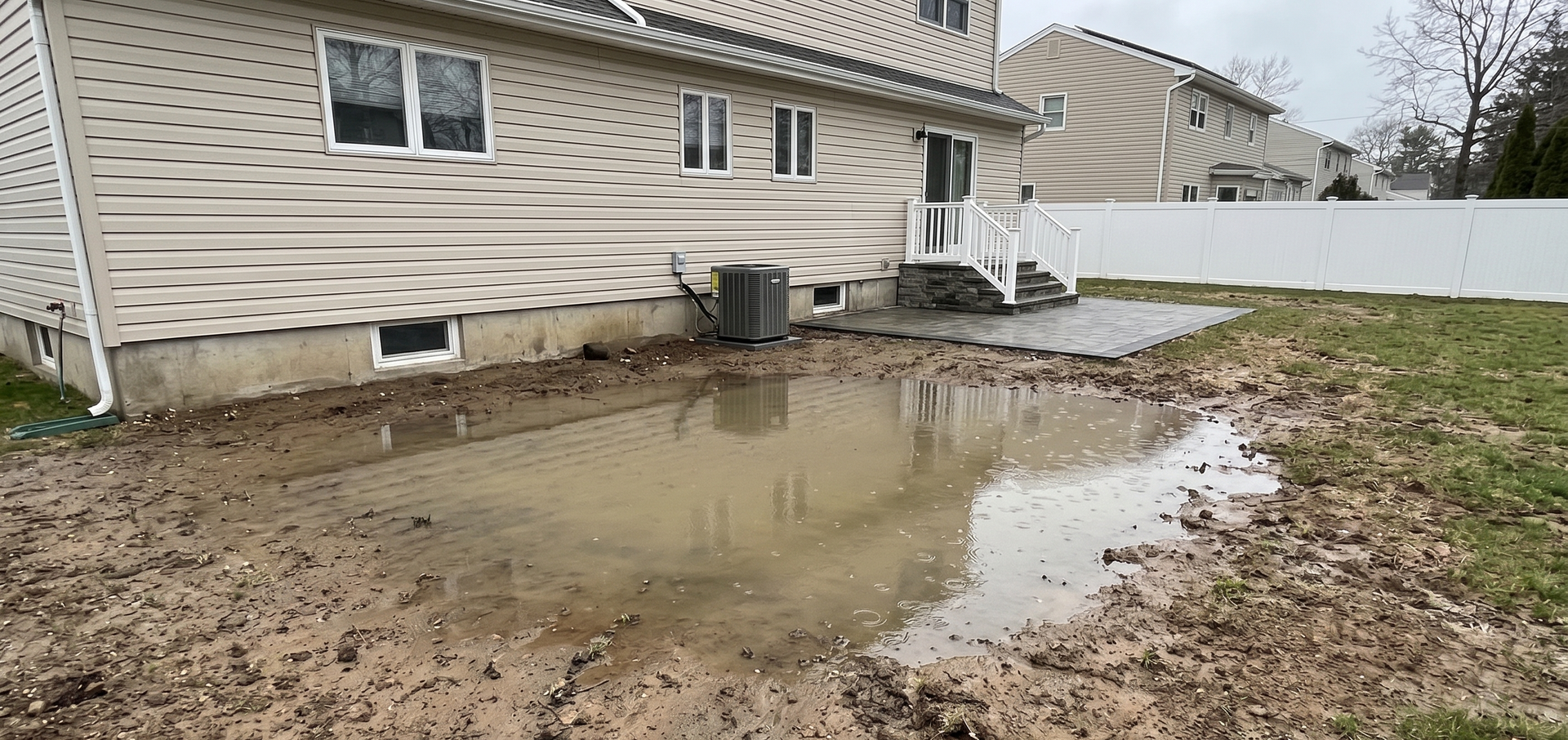
Long Island's flat terrain, clay-heavy soil, and proximity to the water table create a perfect storm for drainage issues. If you've noticed water pooling in your yard after a rainstorm, damp basement walls, or soggy patches that never seem to dry out, the root cause is almost always poor subsurface drainage.
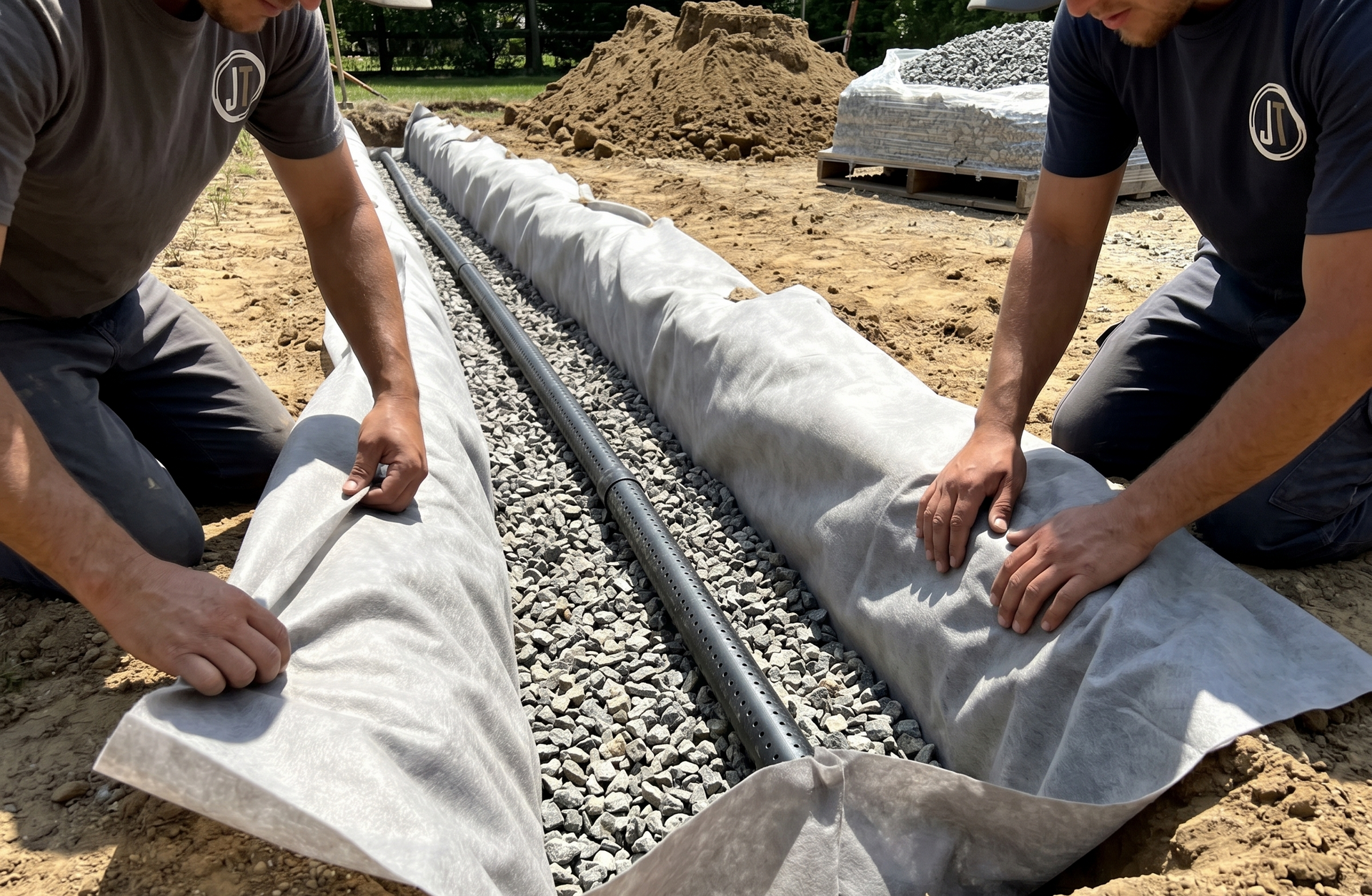
A french drain is a trench-based system filled with washed gravel and a perforated pipe that captures groundwater below the surface and channels it away from problem areas — your foundation, your patio, your retaining walls, or any low-lying section of your property. Unlike surface-level fixes that only move water temporarily, a french drain addresses the issue underground, where it actually starts.
The result is more than just a dry yard. When you eliminate standing water, you also reduce the risk of mold growth in your home, prevent soil erosion that undermines hardscaping, and protect the investment you've made in your outdoor living space.
For beautiful walkways that stand the test of time, contact JT Masonry and Landscaping, schedule an appointment or call us at: (516) 732-5133
What Our French Drain Installation Process Looks Like
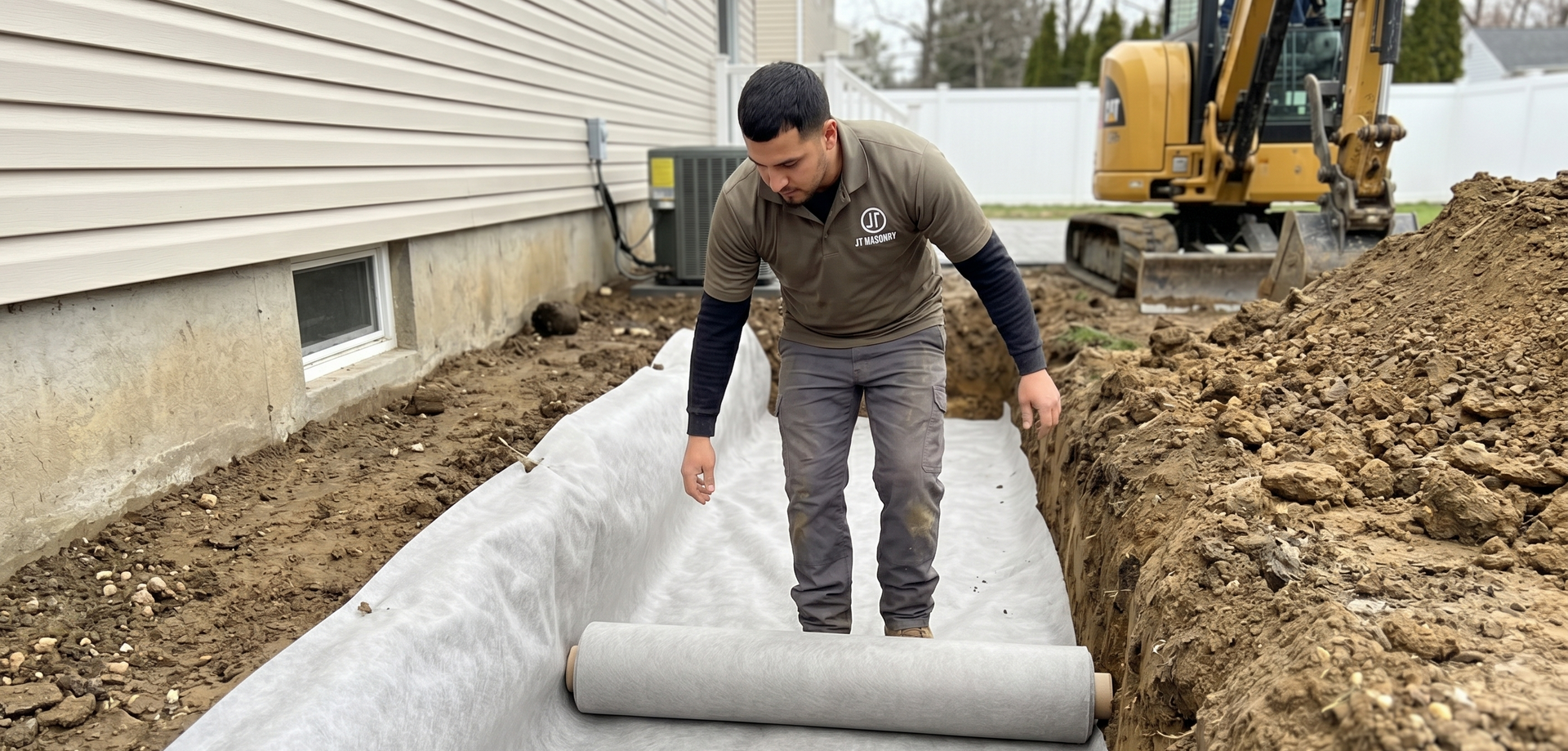
Every french drain installation we handle at JT Masonry begins with a personal meeting at your property. We assess the grade, soil composition, and water flow patterns unique to your lot — because no two Long Island properties drain the same way. From there, we design a system tailored to your specific needs. Here's what goes into a professional installation:
- Utility location and site preparation. Before any digging begins, underground utilities are identified and marked to ensure a safe worksite.
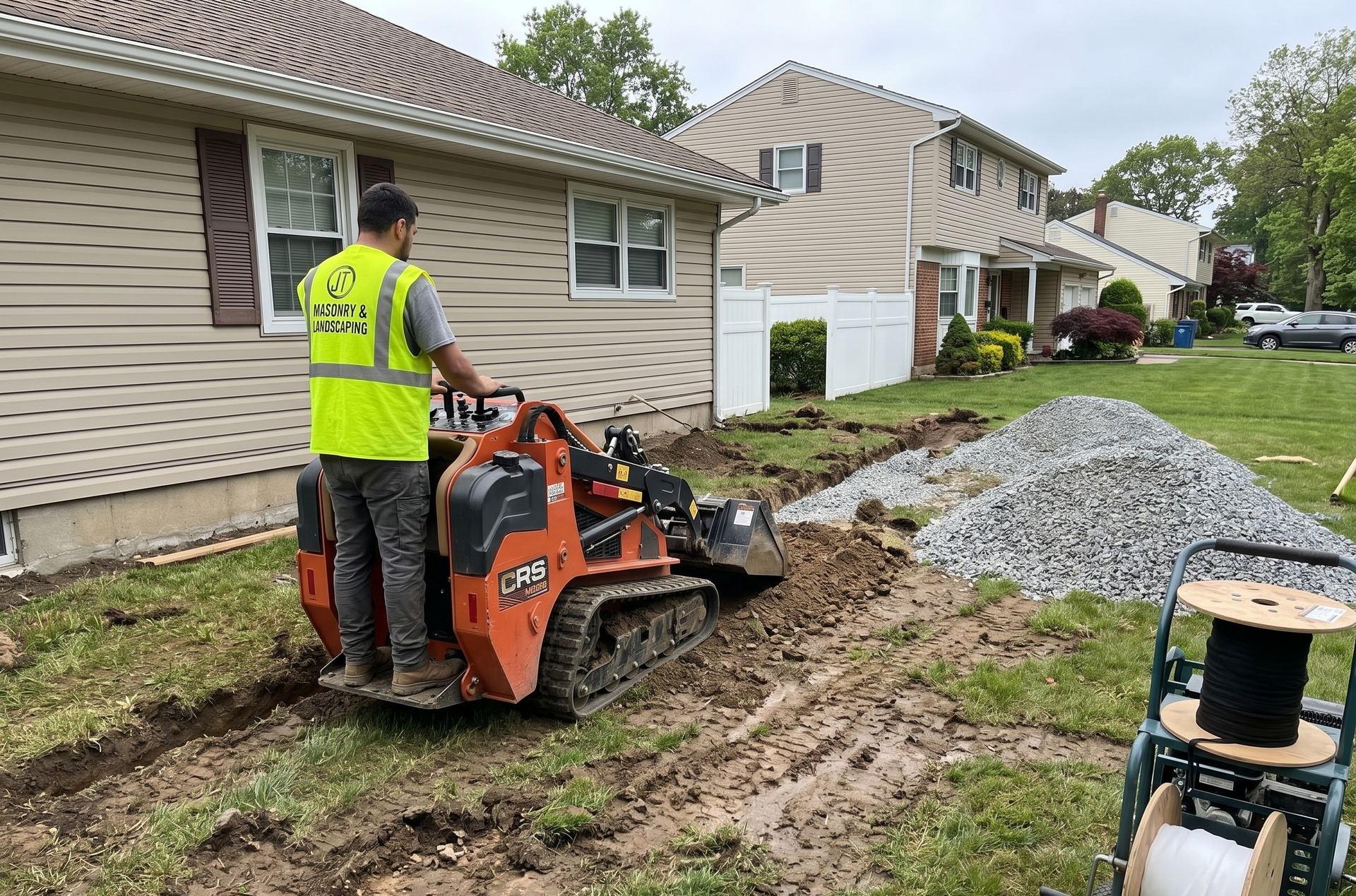
- Trench excavation along a calculated slope. The trench is dug to the proper depth (typically 18–24 inches) and graded at a minimum 1% slope — roughly one inch of drop for every eight to ten feet — so water flows consistently toward the discharge point.
- Filter fabric lining. Nonwoven geotextile fabric lines the trench to prevent soil and silt from infiltrating and clogging the gravel bed over time. This step is critical for long-term performance.
- Gravel base and perforated pipe placement. A layer of washed gravel is added before laying a rigid perforated pipe (holes facing downward) to maximize water collection. Additional gravel surrounds and covers the pipe.
- Proper discharge routing. The final section of pipe transitions to solid piping to direct water to a safe discharge point — whether that's a drainage ditch, dry well, or pop-up emitter — away from your home and neighboring properties.
- Wrap, backfill, and restoration. The filter fabric is folded over the top of the gravel, and the trench is covered with soil and sod so the system is virtually invisible once complete.
This isn't a weekend DIY project done right. Every detail — from the trench grade to the gravel type to the fabric overlap — affects how well the system performs for years to come.
Frequently Asked Questions About French Drain Installation
How long does a french drain installation take on a typical Long Island property?
The timeline for french drain installation depends on the length of the trench, the complexity of the routing, and the specific conditions of your property. Most residential installations on Long Island are completed within one to three days. During the initial consultation, JT Masonry provides a clear project timeline so you know exactly what to expect. We also coordinate around existing landscaping and hardscape features to minimize disruption to your yard during the process, and we leave the job site clean when the work is finished.
What type of pipe is used in a french drain?
Professional french drain installation typically uses rigid perforated PVC pipe or corrugated plastic pipe, usually 3.5 to 4 inches in diameter. At JT Masonry, the pipe selection is based on the volume of water the system needs to handle and the specific layout of your property. The perforated section of the pipe is installed with the holes facing downward, which allows groundwater to rise into the pipe from below rather than allowing soil sediment to fall in from above. The final section of the system transitions to solid pipe to carry collected water safely to the discharge point without any leakage along the way.
How much does french drain installation cost?
The cost of french drain installation varies based on several factors, including the total length of the trench, the depth required, soil conditions, accessibility of the work area, and the type of discharge point used. Because every Long Island property presents different challenges — from root systems and utility lines to soil composition and grade — we provide customized estimates rather than one-size-fits-all pricing. JT Masonry offers free on-site consultations where we evaluate your specific situation and provide a transparent, detailed estimate with no hidden fees. We also offer financing options to make drainage solutions accessible for homeowners.
Will a french drain damage my existing landscaping or hardscaping?
Some disruption to the yard surface is unavoidable during excavation, but a skilled installation crew minimizes the impact significantly. At JT Masonry, we carefully plan the trench route to avoid established plantings, irrigation lines, and hardscape features wherever possible. Once the french drain is installed and the trench is backfilled with soil and sod, the surface is restored and the system becomes virtually invisible. Our experience with both masonry and landscaping means we understand how to work around — and protect — the features you've already invested in, including patios, walkways, retaining walls, and pool areas.
How do I know if my property actually needs a french drain?
There are several reliable indicators that your property could benefit from french drain installation. Persistent standing water in your yard after rainstorms, damp or wet basement walls, efflorescence (white mineral deposits) on foundation surfaces, soggy or unusable sections of your lawn, and erosion around the base of your home or retaining walls are all signs that subsurface water isn't draining properly. If you've tried surface-level solutions like regrading or extending downspouts without lasting results, the problem is likely below the surface — which is exactly where a french drain operates. JT Masonry offers free property assessments to help you determine whether a french drain is the right solution for your specific drainage issue.ShareProject contentService Page Copy GeneratorCreated by youAdd PDFs, documents, or other text to reference in this project.
Why Long Island Homeowners Trust JT Masonry for French Drain Installation
Choosing the right contractor for french drain installation makes the difference between a system that works flawlessly for a decade and one that fails within a year. Here's why Long Island homeowners consistently choose JT Masonry & Landscaping:
- Deep local knowledge. We understand Long Island's specific soil conditions, water table behavior, and municipal codes across both Nassau and Suffolk County. That experience translates directly into drainage systems designed for this region.
- Full-service masonry and hardscape expertise. French drains often need to integrate with patios, retaining walls, pools, and walkways. Because we build those features too, we design drainage solutions that work with your entire property — not just one piece of it.
- Owner-involved project management. You deal directly with the owner from the initial consultation through final walkthrough. No middlemen, no miscommunication.
- Licensed, insured, and detail-oriented. We scope every project carefully upfront so there are no surprises during installation.
- Over 200 satisfied homeowners across Long Island who have trusted us with masonry, drainage, and outdoor construction projects.
Can I Install My Own French Drain?
While it is technically possible to install a french drain yourself, the reality is that most DIY installations run into problems that compromise the system's effectiveness. Calculating the correct trench slope, choosing the right pipe diameter, selecting appropriate gravel, and properly wrapping the system in filter fabric all require precision. A slope that's too shallow will leave water sitting in the pipe. Using the wrong gravel allows fine sediment to clog the system. Skipping or improperly placing the geotextile fabric dramatically shortens the drain's lifespan.
There's also the matter of utility lines. Long Island properties often have gas, electric, and water lines buried at various depths, and hitting one of those during excavation can be dangerous and expensive. Professional french drain installation ensures that 811 utility locates are completed beforehand and that excavation is handled safely.
For homeowners who want a drainage solution that works correctly the first time and continues performing for years, professional installation is the approach that delivers real value.
What Are the Downsides of a French Drain?
No drainage solution is without considerations, and it's important to understand what a french drain involves before committing. The installation does require excavation, which means a section of your yard will be temporarily disrupted during the process. There is also a cost associated with professional installation — but when weighed against the expense of foundation repair, basement waterproofing, or replacing damaged hardscaping, a french drain is a far more cost-effective investment.
Over time, even well-installed french drains can experience reduced performance if the outflow point becomes obstructed by debris or if root intrusion occurs. This is why proper filter fabric installation and thoughtful pipe routing are so important from the start. With quality materials and professional installation, a french drain can perform effectively for many years, and routine checks of the discharge point help maintain optimal function.
The honest truth is that the downsides of a french drain are minimal compared to the consequences of leaving a drainage problem unresolved — which can include structural damage, mold, and significant property value loss.
How Deep Should a French Drain Be Placed?
The ideal depth for a french drain depends on what the system is designed to protect. For yard drainage and surface water management, a trench depth of 18 to 24 inches is standard. This allows the perforated pipe to sit below the root zone and capture subsurface water effectively.
For french drains installed to protect a foundation — often called a footing drain — the trench may need to extend deeper, sometimes to the level of the foundation's footer. The width of the trench typically ranges from 9 to 12 inches, providing enough room for a gravel bed, the perforated pipe, and additional gravel fill.
At JT Masonry, we evaluate the specific conditions of your property during our initial consultation to determine the appropriate depth and configuration. Factors like soil type, the severity of the water issue, the location of the drain relative to your home, and the position of the discharge point all influence the final design. There's no one-size-fits-all answer, which is exactly why professional assessment matters.
Who Benefits Most from French Drain Installation on Long Island?
French drain installation isn't a niche service — it's a practical solution for a wide range of Long Island homeowners. If any of the following situations sound familiar, a french drain may be exactly what your property needs:
Homeowners dealing with recurring basement moisture or flooding often find that a french drain installed along the exterior foundation perimeter eliminates the problem at its source. Properties with flat or low-lying yards where water collects and sits for days after rain benefit from a subsurface drainage system that moves water efficiently to a designated outlet. If you've invested in a patio, retaining wall, outdoor kitchen, or pool, a french drain protects that investment by preventing the water saturation that undermines hardscape foundations and causes shifting or cracking over time.
Even homeowners planning new construction or outdoor renovations benefit from incorporating french drain installation into the project from the beginning — it's far easier and more cost-effective to install drainage during construction than to retrofit it later.
Long-Term Value of Professional French Drain Installation
A properly installed french drain does more than fix today's water problem. It creates lasting protection that continues to pay dividends long after the project is complete. Your foundation stays dry, your landscaping stays intact, and your outdoor living spaces remain usable even after heavy rain. The structural integrity of retaining walls, patios, and pool surrounds is preserved because the soil beneath them isn't being eroded by uncontrolled water movement.
There's also a real impact on property value. Buyers and inspectors notice drainage problems — and they notice when those problems have been professionally resolved. A well-designed french drain system is a tangible improvement that adds both function and value to your home.
Get a Free French Drain Installation Estimate
If water is creating problems on your Long Island property, waiting only makes it worse. JT Masonry & Landscaping provides free, on-site estimates for french drain installation across Nassau and Suffolk County. We'll assess your property, explain your options, and design a drainage solution built to perform in Long Island's unique conditions.
Call us at (516) 732-5133 or request your free estimate online. We respond within 24 hours.