

French Drain Installation in Sands Point, NY
Stop Water Damage Before It Starts — Professional Drainage Solutions for Sands Point Homeowners
Perched on a peninsula along Long Island's North Shore, Sands Point is defined by its waterfront character, estate-scale properties, and a landscape that sits in constant proximity to Long Island Sound. That setting is part of what makes living here exceptional — and part of what makes water management a concern that homeowners in this community can't afford to overlook. The combination of coastal elevation changes, high water table influence, and the sheer scale of most properties here creates drainage conditions that vary dramatically from lot to lot. French drain installation on Long Island is how JT Masonry & Landscaping helps Sands Point homeowners stay ahead of those conditions before they become structural problems. Over 15 years of working across Nassau and Suffolk County has made one thing consistently clear: water that isn't directed somewhere intentional will find its own path — through foundations, under hardscape, and into landscapes — and the damage it leaves behind compounds far faster than most homeowners expect.

Contact JT Masonry and Landscaping!
Our team is ready to turn your vision into reality, creating stunning landscapes and enduring masonry structures.
Website Lead Form (Stone Veneers Page)

CLIENT REVIEWS
WHAT OUR CLIENTS ARE SAYING
JT Masonary and landscaping were exceptional right from the first point of contact to the completion of their work. The owner JUSTIN was very professional in the way he presented the work he was going to do. The workers were polite, efficient, and hard-working. And the results of their work was phenomenal! We are already considering them for another job. Thank you JUSTIN and Company.
We had a great experience with Justin and the crew at JT Masonry & Landscaping. We got a inground pool and pavers installed. They made it easy every step of the way from the planning stage to our first pool opening. We would definitely recommend this company to family and friends.


How French Drain Installation in Sands Point Solves Your Property's Biggest Water Problems
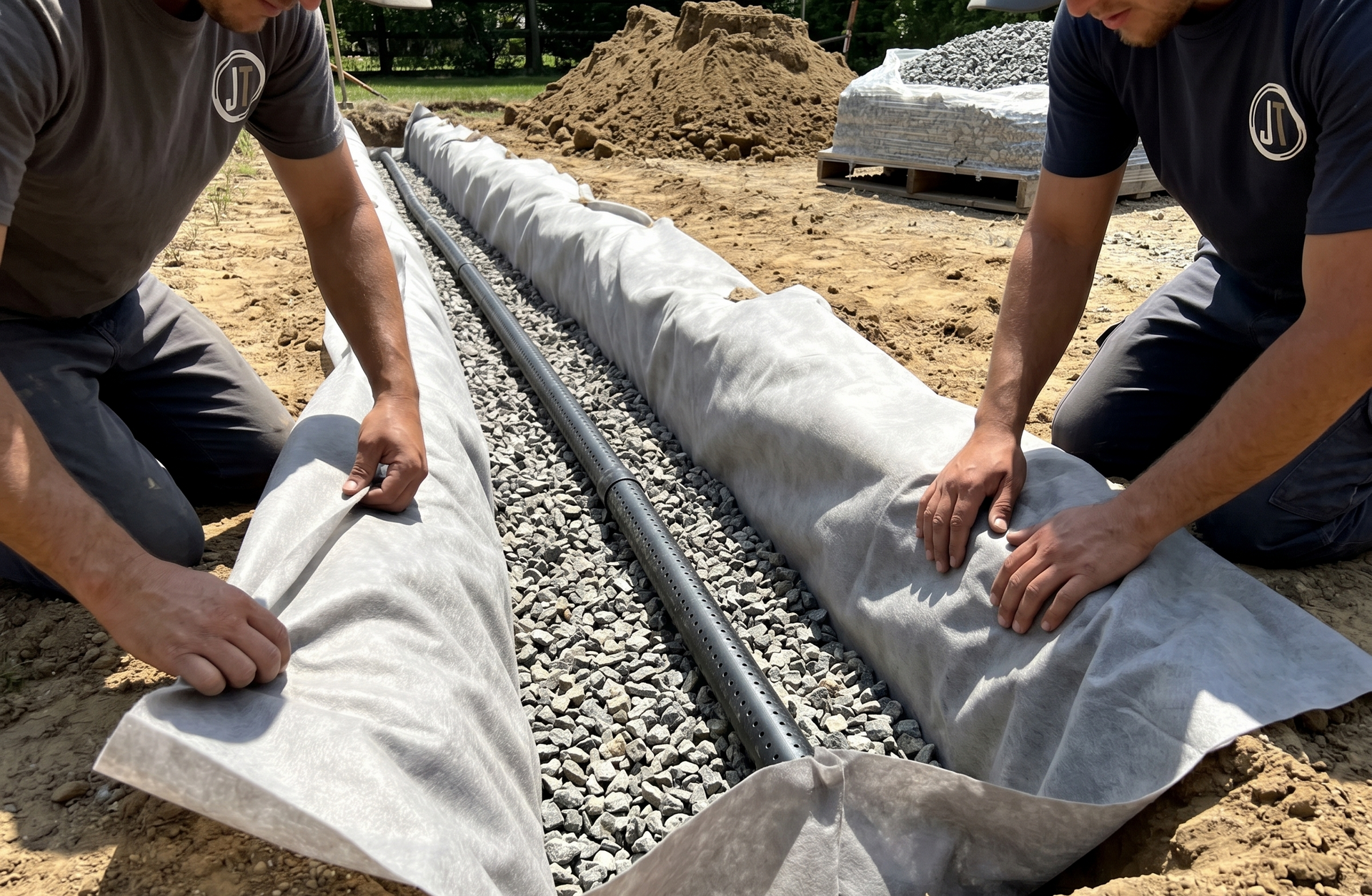
Sands Point's North Shore geography brings a specific set of drainage dynamics that differ from much of Nassau County. Bluff-adjacent lots deal with runoff that accelerates down grade before pooling at lower elevations. Properties closer to the Sound contend with groundwater that responds to tidal influence. And even lots set back from the waterfront share the regional challenges common to Long Island as a whole — soil that limits natural percolation, a water table that doesn't offer much buffer, and terrain that doesn't always move water in a useful direction on its own.
A french drain is built for exactly these circumstances. Installed beneath the surface, the system combines a gravel-filled trench with a perforated pipe to capture groundwater where it accumulates and redirect it toward a controlled discharge point — away from foundation walls, retaining structures, patio slabs, and any section of the property where saturation causes damage. Surface drainage measures treat water after it has already pooled. A french drain addresses it underground, where the problem originates.
The benefits extend beyond the immediate drainage fix. Soil that moves water predictably doesn't erode the way chronically saturated ground does — meaning retaining walls stay plumb, patios remain level, and plantings hold their root structure through wet seasons. The mold and moisture conditions that wet basements create are eliminated at the source rather than managed inside the home. And outdoor environments that currently lose weeks of usability to standing water become functional again across the full season.
For beautiful walkways that stand the test of time, contact JT Masonry and Landscaping, schedule an appointment or call us at: (516) 732-5133
What Our French Drain Installation Process Looks Like
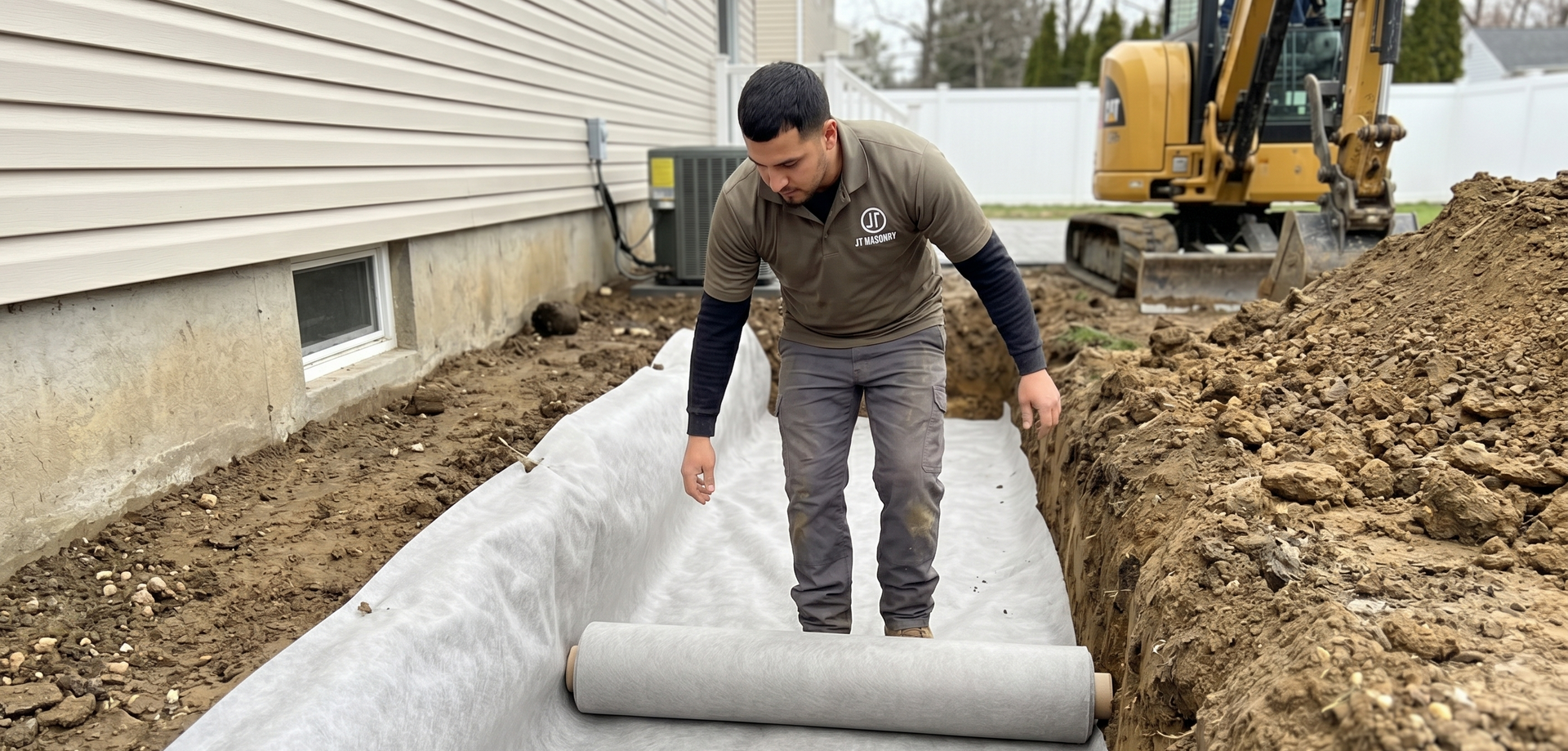
Estate properties in Sands Point rarely share the same drainage profile. Lot topography, proximity to the water, existing hardscape layouts, mature tree placement, and the configuration of any below-grade structures all shape how water behaves on any given property — which is why JT Masonry & Landscaping approaches every french drain installation with a dedicated site visit before design work begins. There's no standard plan that transfers cleanly from one property to the next. We assess your specific conditions, identify where drainage is failing and why, and build a system configured precisely for your lot. Professional installation follows a defined sequence that each plays a direct role in long-term performance:
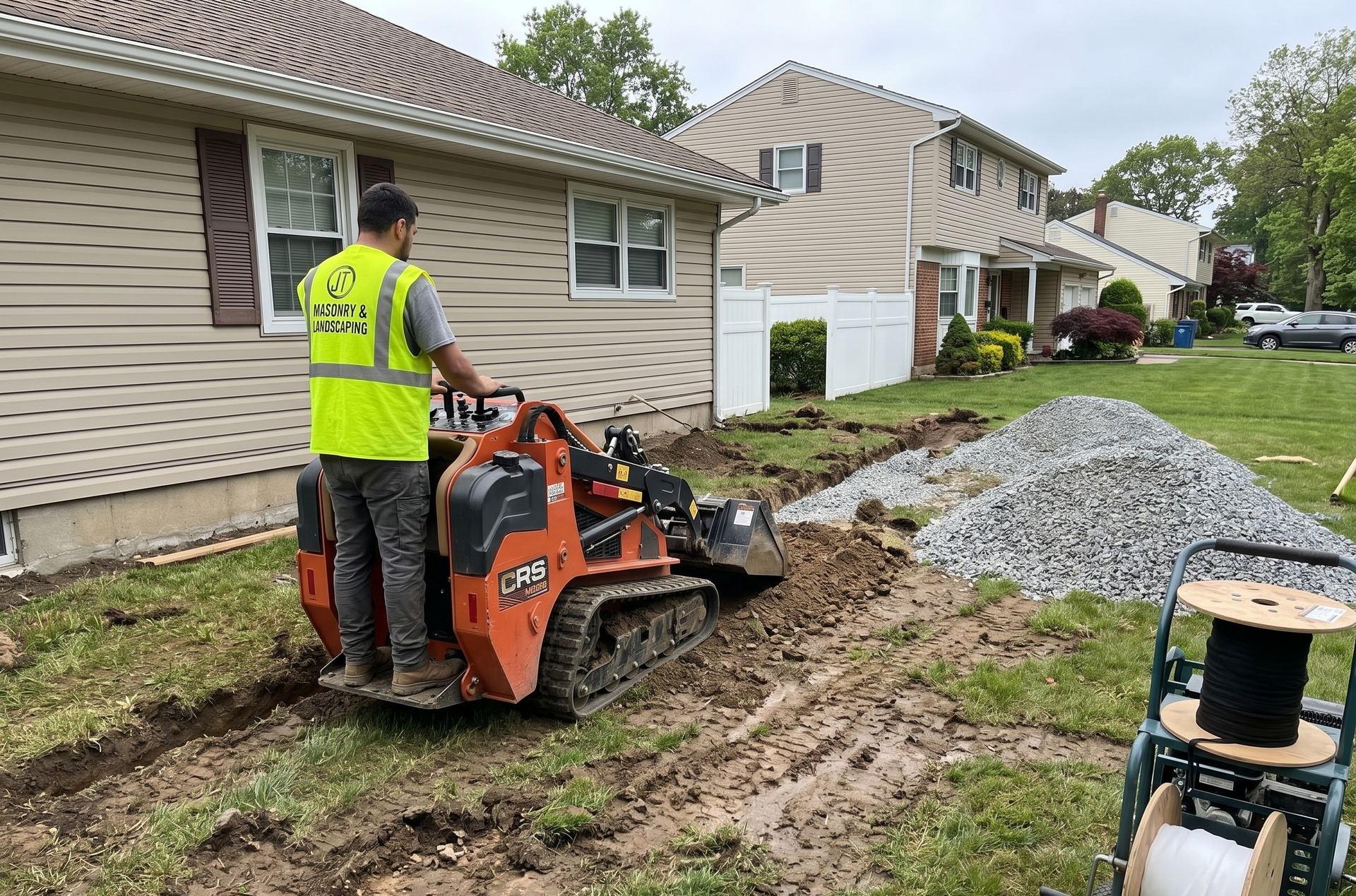
✔ Utility location and site preparation. An 811 utility locate is completed and all underground lines — gas, electric, water, irrigation — are marked before excavation begins. On properties with extensive outdoor infrastructure, this step is especially critical and is treated as a firm prerequisite on every project without exception.
✔ Trench excavation along a calculated slope. The trench is excavated to a working depth of 18 to 24 inches and graded at a minimum 1% slope — one inch of fall per eight to ten feet of run — maintaining the consistent pitch needed to keep water moving toward the outlet rather than sitting stagnant inside the pipe.
✔ Filter fabric lining. Nonwoven geotextile fabric is laid throughout the trench prior to any gravel placement. This layer keeps fine soil particles from migrating into the drainage bed — the single most common cause of performance decline in systems that weren't built with this step given proper attention.
✔ Gravel base and perforated pipe placement. Washed gravel is placed first to form the drainage bed, followed by a rigid perforated pipe installed with holes oriented downward to maximize water intake across the full length of the run. Gravel is compacted around and over the pipe to complete the assembly.
✔ Proper discharge routing. The perforated pipe transitions to solid piping as it approaches the outlet, carrying collected water to a designated discharge point — a dry well, drainage ditch, or pop-up emitter — chosen based on property layout and local code requirements.
✔ Wrap, backfill, and restoration. Filter fabric is folded over the top of the gravel bed, the trench is closed with backfill and finished with sod. On a Sands Point estate where landscape presentation is part of the property's identity, that seamless finish isn't just cosmetic — it's expected.
Each step in this sequence carries weight. The trench grade, gravel specification, pipe orientation, and fabric installation are what separate a system that performs reliably for a decade from one that needs to be revisited within a few seasons.
Frequently Asked Questions About French Drain Installation in Sands Point, NY
How long does a french drain installation take on a typical Long Island property?
The timeline for french drain installation depends on the length of the trench, the complexity of the routing, and the specific conditions of your property. Most residential installations on Long Island are completed within one to three days. During the initial consultation, JT Masonry provides a clear project timeline so you know exactly what to expect. We also coordinate around existing landscaping and hardscape features to minimize disruption to your yard during the process, and we leave the job site clean when the work is finished.
What type of pipe is used in a french drain?
Professional french drain installation typically uses rigid perforated PVC pipe or corrugated plastic pipe, usually 3.5 to 4 inches in diameter. At JT Masonry, the pipe selection is based on the volume of water the system needs to handle and the specific layout of your property. The perforated section of the pipe is installed with the holes facing downward, which allows groundwater to rise into the pipe from below rather than allowing soil sediment to fall in from above. The final section of the system transitions to solid pipe to carry collected water safely to the discharge point without any leakage along the way.
How much does french drain installation cost?
The cost of french drain installation varies based on several factors, including the total length of the trench, the depth required, soil conditions, accessibility of the work area, and the type of discharge point used. Because every Long Island property presents different challenges — from root systems and utility lines to soil composition and grade — we provide customized estimates rather than one-size-fits-all pricing. JT Masonry offers free on-site consultations where we evaluate your specific situation and provide a transparent, detailed estimate with no hidden fees. We also offer financing options to make drainage solutions accessible for homeowners.
Will a french drain damage my existing landscaping or hardscaping?
Some disruption to the yard surface is unavoidable during excavation, but a skilled installation crew minimizes the impact significantly. At JT Masonry, we carefully plan the trench route to avoid established plantings, irrigation lines, and hardscape features wherever possible. Once the french drain is installed and the trench is backfilled with soil and sod, the surface is restored and the system becomes virtually invisible. Our experience with both masonry and landscaping means we understand how to work around — and protect — the features you've already invested in, including patios, walkways, retaining walls, and pool areas.
How do I know if my property actually needs a french drain?
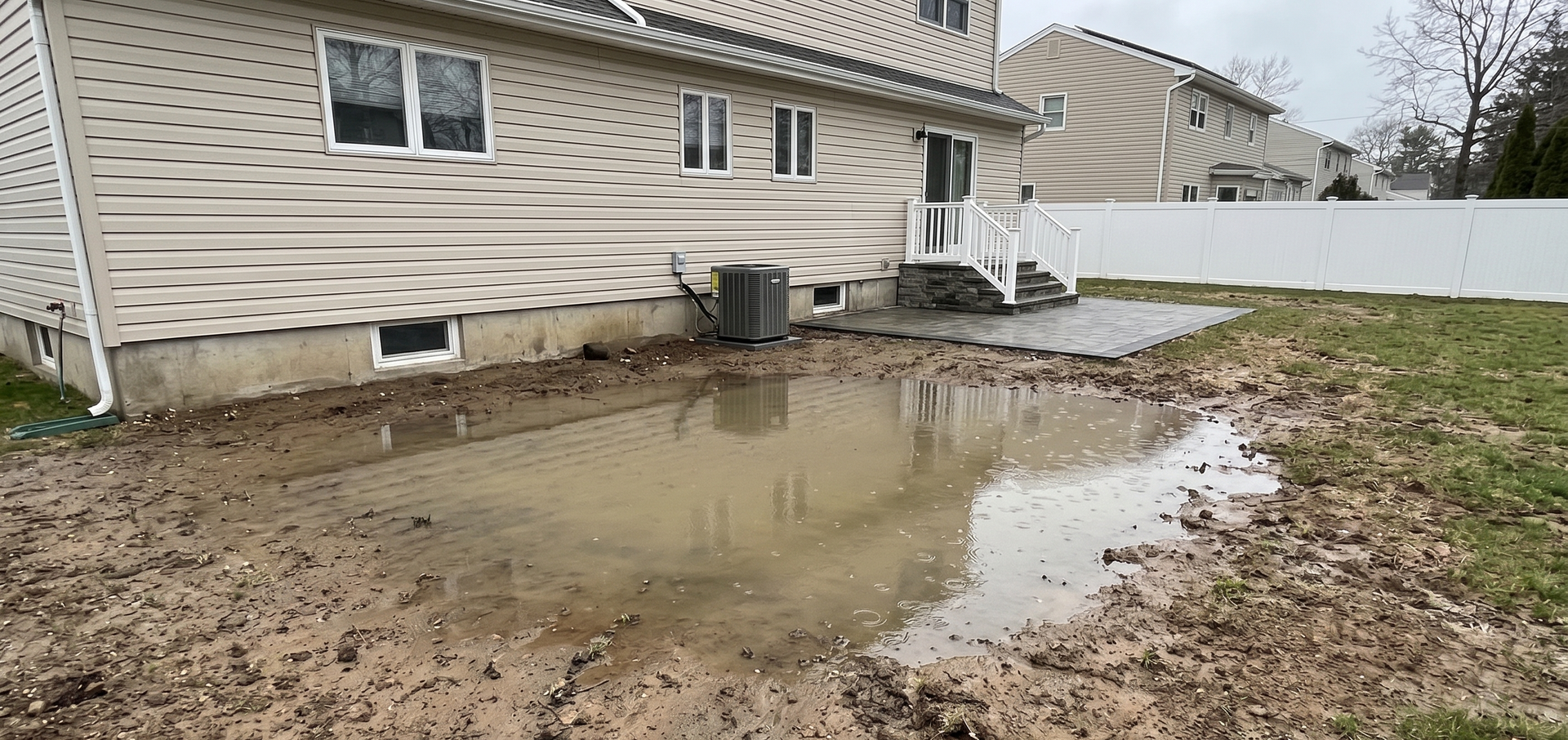
There are several reliable indicators that your property could benefit from french drain installation. Persistent standing water in your yard after rainstorms, damp or wet basement walls, efflorescence (white mineral deposits) on foundation surfaces, soggy or unusable sections of your lawn, and erosion around the base of your home or retaining walls are all signs that subsurface water isn't draining properly. If you've tried surface-level solutions like regrading or extending downspouts without lasting results, the problem is likely below the surface — which is exactly where a french drain operates. JT Masonry offers free property assessments to help you determine whether a french drain is the right solution for your specific drainage issue.ShareProject contentService Page Copy GeneratorCreated by youAdd PDFs, documents, or other text to reference in this project.
Why Sands Point Homeowners Trust JT Masonry for French Drain Installation
On a property of the scale and value common to Sands Point, selecting the right contractor for french drain installation carries real consequence. The system has to be designed for the specific lot, built with materials that hold up, and coordinated with whatever other outdoor features exist on the property. Homeowners across Long Island choose JT Masonry & Landscaping for reasons that matter beyond the day the project wraps:
✔ Deep familiarity with Long Island's drainage environment. Soil profiles, water table behavior, and municipal requirements vary across Nassau and Suffolk County in ways that directly affect how drainage systems need to be designed. That regional fluency — developed over 15 years of consistent work in this market — is built into every decision we make on site.
✔ End-to-end outdoor construction expertise. Sands Point properties often feature extensive and interconnected outdoor improvements — terraced retaining walls, formal hardscape, pool environments, and custom landscape installations. Because JT Masonry builds those features directly, drainage systems are designed as part of the complete property, accounting for how each element relates to the others.
✔ Consistent owner involvement throughout. From the first site visit to the final walkthrough, the owner is the person you work with. No delegation to unfamiliar crews, no information lost between the consultation and the build. What gets agreed on gets built.
✔ Licensed, insured, and specific about project scope from the start. Every project is evaluated in full before work begins. Scope is defined clearly, pricing is transparent, and there are no additions that weren't part of the original assessment.
✔ 200+ completed projects across Long Island — a body of work built on drainage, masonry, and outdoor construction projects for homeowners who expected results and received them.
Can I Install My Own French Drain in Sands Point?
French drain installation requires a level of precision that isn't obvious until something is off. Trench slope seems straightforward until it's measured incorrectly over a long run and water begins collecting inside the pipe rather than moving through it. Gravel selection appears minor until the wrong gradation allows fine particles to migrate through the system and steadily reduce its capacity. Pipe sizing matters more as water volume increases — undersizing creates backpressure that the system wasn't designed to handle. And filter fabric applied loosely or incompletely doesn't protect the drainage bed the way it's supposed to, shortening the system's effective lifespan without any visible indication until flow is already compromised.
For Sands Point homeowners, there's an additional consideration that comes with any subsurface work on a developed property: buried utilities. Irrigation systems, outdoor electrical feeds, gas lines, and water mains run at various depths that frequently intersect with drainage trenches. Professional french drain installation on Long Island means the 811 locate is completed before the first shovel breaks ground — not as a formality, but as a genuine safety measure that changes how excavation is planned and executed.
The bottom line is consistent across every property we've worked on: drainage done right operates quietly in the background for years. Drainage done incorrectly becomes a project you eventually have to do twice.
What Are the Downsides of a French Drain?
A clear-eyed understanding of what french drain installation involves makes the process easier to plan around and the decision easier to commit to. The work requires excavation — that's unavoidable with any subsurface drainage system — and a defined section of your property will be temporarily disrupted while the system is being built. On a larger Sands Point estate, the scope of that disruption may be more significant than on a standard residential lot, and it's worth mapping out in detail during the initial consultation. Professional installation does carry a cost, but the context matters: foundation repair, basement remediation, and structural hardscape reconstruction — all common consequences of unmanaged drainage — represent some of the most substantial property expenses available, and they're typically the result of problems that could have been addressed far more affordably earlier.
Properly installed french drains are built to last with minimal intervention, but the discharge outlet benefits from occasional attention. Debris accumulation and root intrusion near the outlet end of the system are the most common causes of gradually reduced flow, and both are straightforward to address when the system was built correctly from the beginning. Thoughtful pipe routing and quality filter fabric installation are the decisions that most directly influence how the system holds up over time — which is why they're treated as priorities rather than details during every installation we manage.
There's nothing complicated about the trade-off: short-term disruption and a defined investment upfront, against structural damage, mold risk, and property value loss that accumulates when drainage problems are left to develop on their own.
How Deep Should a French Drain Be Placed?
The correct depth for a french drain is determined by the specific problem it's solving — not by a default specification applied uniformly across every project. For general yard drainage and subsurface water management, a trench depth of 18 to 24 inches places the perforated pipe below the root zone and within the range where groundwater can be effectively intercepted before it saturates the surrounding soil. Foundation drainage applications require a different approach entirely: the trench needs to reach the level of the foundation footer to intercept water before hydrostatic pressure develops against the wall, and on Sands Point properties with full basements or deep foundations, that can mean excavating well beyond standard yard drainage depth. Trench width typically ranges from 9 to 12 inches — sufficient to house the gravel bed, pipe assembly, and surrounding fill without unnecessary disruption to the surrounding landscape.
Properties along the North Shore, including those throughout Sands Point, introduce additional depth considerations tied to coastal groundwater behavior, grade variation across larger lots, and the presence of retaining structures or terraced landscape features that create their own drainage dynamics. JT Masonry works through all of these variables during the initial on-site consultation — soil conditions, the nature and severity of the water issue, the drain's relationship to the home's foundation, and the discharge options realistically available on the property all feed into the final design. That assessment is where accurate depth and configuration decisions get made, and it's what ensures the system being built is the right system for the conditions it's addressing.
Who Benefits Most from French Drain Installation in Sands Point?
French drain installation on Long Island addresses drainage problems across a broad range of property types — and in a community like Sands Point, where properties are large, outdoor investments are substantial, and proximity to the water table is a consistent variable, the range of applicable situations is especially wide:
Basement moisture or water intrusion following heavy rainfall is one of the clearest indicators that exterior subsurface drainage is inadequate. A french drain installed along the foundation perimeter captures groundwater before it accumulates against the wall and builds hydrostatic pressure, resolving the issue at its source rather than managing it from inside the home. Properties with grade changes, bluff adjacency, or natural low points where water migrates and collects benefit directly from a subsurface drainage system that intercepts that movement and routes it to a controlled outlet — restoring usability to areas of the yard that currently take days to recover after a storm. For homeowners who have invested in premium hardscape — pool environments, multi-level terracing, custom patios, formal walkways — french drain infrastructure protects those investments by preventing the soil saturation and erosion that eventually destabilizes foundations and causes surface-level cracking and settling.
Any homeowner in Sands Point planning new construction or a significant landscape renovation is also well positioned to incorporate drainage during the build. Installing a french drain as part of an active project is far more efficient and cost-effective than retrofitting the same system once the hardscape and plantings are already in place.
Long-Term Value of Professional French Drain Installation in Sands Point, NY
What a properly installed french drain delivers, more than anything else, is consistency. Consistency in how your property handles water after a storm, how the ground beneath your hardscape behaves through wet and dry cycles, how your foundation holds up under the hydrostatic conditions that Long Island's water table can produce. These aren't outcomes that show up dramatically — they show up in everything that doesn't go wrong over the years that follow installation.
On a Sands Point property, where the scale of outdoor investment and the proximity to coastal water dynamics both amplify the stakes, that consistency carries genuine financial weight. It also carries market weight. Buyers conducting due diligence on a property of this caliber look closely at drainage — and they notice, equally, when drainage has been professionally addressed. A french drain system in place and performing correctly is visible in a dry foundation, intact hardscaping, and healthy landscaping. It tells a story about how the property has been maintained and what a future owner won't have to deal with. For Sands Point homeowners who take the long view on both livability and property value, that combination makes french drain installation one of the most purposeful investments they can make in the land around them.
Get a Free French Drain Installation Estimate in
Sands Point, NY
Drainage problems on a Sands Point property don't resolve between seasons — they deepen. JT Masonry & Landscaping provides free, on-site estimates for french drain installation across Nassau and Suffolk County, and we work regularly with homeowners throughout Sands Point and the surrounding North Shore communities. We'll visit your property in person, evaluate the drainage conditions directly, and develop a system designed around what your specific lot requires — not a standardized approach applied without regard for what's actually happening on the ground.
Reach us at (516) 732-5133 or submit your request online. We respond within 24 hours.